How to Start Saving for a Down Payment in Calgary

Buying a home in Calgary can feel like a huge goal, especially when you are starting from the beginning.
The best place to start is not by trying to understand every mortgage rule or every buyer program all at once. The best place to start is by getting clear on three things:
How much money you need to save.
Whether your credit is strong enough.
What kind of home you are realistically working toward.
Once you know those pieces, the process feels a lot less overwhelming.
1. Start by looking at real home prices
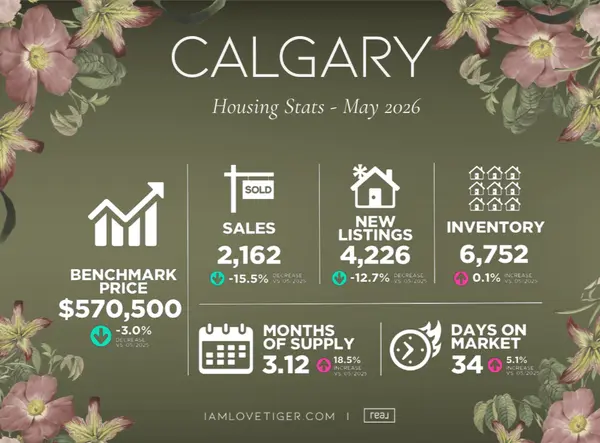
Before you decide how much to save, look at what homes actually cost in Calgary right now.
Browse current Calgary listings and pay attention to the type of home that fits your life. Are you looking at condos, townhomes, duplexes, or detached homes? Your first home does not have to be your forever home. It just needs to be a smart first step.
You can start browsing current Calgary homes for sale here:
Browse Calgary homes for sale
As you look, notice the price ranges that keep coming up. That will help you build a more realistic down payment goal.
2. Know your down payment target
In Canada, the minimum down payment depends on the purchase price.
For many buyers, the minimum starts at 5% of the purchase price. For homes above $500,000, the calculation changes because you need 5% on the first $500,000 and 10% on the portion above $500,000. Homes priced at $1.5 million or more require at least 20% down.
For example:
A $400,000 home needs a minimum down payment of $20,000.
A $500,000 home needs a minimum down payment of $25,000.
A $600,000 home needs a minimum down payment of $35,000.
These numbers do not include closing costs, moving costs, inspection costs, legal fees, or your emergency cushion.
That is why your real savings target should be higher than just the minimum down payment.
3. Check your credit early
Your credit matters when you are getting ready to buy a home.
A credit score of 600 is commonly listed as the minimum for CMHC-insured mortgage programs, but minimum does not mean ideal. A better practical goal is to work toward 650 or higher, and stronger is always better.
If your credit is not where you want it to be, do not panic. Just start working on it early.
You can learn more about credit reports and credit scores here:
Credit report and score basics — Government of Canada
You can also check your credit through the main Canadian credit bureaus:
4. Improve your credit before you apply
If your credit needs work, focus on the basics first.
Pay every bill on time.
Keep credit card balances low.
Try to use less than 30% of your available credit.
Avoid applying for too much new credit at once.
Check your credit report for errors.
The Government of Canada recommends keeping credit use under 30% of your available limit because higher utilization can hurt your score.
You can read more here:
How to improve your credit score — Government of Canada
How to improve your credit score — Equifax Canada
How to improve your credit score — TransUnion Canada
Credit repair does not usually happen overnight. Give yourself time. Even a few months of better habits can help you move in the right direction.
5. Open a separate down payment account
Once you know your target, separate the money.
Do not keep your down payment savings in the same account you use for everyday spending. It is too easy for that money to disappear into groceries, gas, takeout, bills, kids’ activities, and regular life.
Open a separate account and name it something clear, like “Home Down Payment.”
That money now has one job.
6. Automate your savings
You do not need to save the whole amount at once.
Start with a number you can repeat every month. That might be $100, $250, $500, or more depending on your situation.
The amount matters, but the habit matters too.
When extra money comes in, decide ahead of time that part of it goes straight into your down payment account. That could include a tax refund, bonus, commission, gift, side income, or any unexpected lump sum.
Small monthly savings plus occasional lump sums can build faster than people think.
7. Look for money leaks
This step is not about judging yourself.
It is about noticing where money is leaving without much thought.
Look at your last two or three months of spending and ask:
What am I paying for that I barely use?
What could I reduce without making life miserable?
What habit is slowing down my home goal?
You do not need to cut out everything enjoyable. You just need to redirect some money toward the bigger thing you want.
8. Learn about first-time buyer programs
If you are a first-time buyer, there may be programs and accounts that help you prepare.
The First Home Savings Account, also called an FHSA, allows eligible first-time buyers to save toward a qualifying first home. The annual contribution limit is $8,000, with a lifetime contribution limit of $40,000.
You can learn more here:
Buying a home — Government of Canada
Government of Canada programs to support homebuyers — CMHC
There is also the Home Buyers’ Plan, which may allow eligible buyers to withdraw up to $60,000 from their RRSP to buy or build a qualifying home.
You can learn more here:
Home Buyers’ Plan — Canada Revenue Agency
These programs are worth understanding early, but they are not a replacement for building strong savings habits.
9. Set up a home search before you are ready to buy
You do not need to be ready to write an offer to start watching the market.
Setting up a home search helps you learn what is realistic. You will start to notice which homes sell quickly, which ones sit, what different price ranges look like, and which communities fit your budget.
You can start browsing here:
Search Calgary homes for sale
You can also create an account or sign in on my site to save homes and follow listings more easily:
Watch the Calgary Market here.
This is not about rushing. It is about learning the market before you are under pressure.
10. Save for more than the down payment
The down payment is only one part of buying a home.
You should also plan for closing costs, legal fees, inspection costs, moving expenses, utility setup, and a cushion for unexpected costs after possession.
Buying feels much better when you still have breathing room after you move in.
Final thoughts
Saving for a down payment in Calgary is easier when you treat it like a roadmap.
Start by watching real home prices.
Know your down payment target.
Check your credit.
Improve what needs work.
Separate your savings.
Automate the habit.
Learn the buyer programs.
Then start watching the market before you are ready to buy.
You do not need to figure everything out at once. You just need to take the next practical step.
When you are ready to start looking at what your savings could realistically buy in Calgary, I can help you compare homes, communities, and price ranges so you can make a smart move when the timing is right.
Categories
Recent Posts