How to Buy a Home in Calgary: Your 2026 Step-by-Step Guide

How to Buy a Home in Calgary: Your 2026 Step-by-Step Guide
Buying a home in Calgary is one of the biggest financial moves you will make, and the rules around it have changed a lot in the last two years. The market has settled into balanced territory, which means more choice and far less pressure than buyers faced during the frenzy. The financing side has shifted in your favour too, with new savings accounts, longer amortizations, a higher insured price cap, and a brand-new GST break for first-time buyers. Here is how the process works today, and where the new rules can actually save you money.
- Know your numbers before you shop. Look honestly at your income, savings, debts, and credit score. Your credit score drives the interest rate you qualify for, so check it early and clean up anything dragging it down. This is the foundation everything else sits on.
- Use the accounts built for first-time buyers. This is the biggest change since 2023, and most buyers still do not know about it. The First Home Savings Account lets you contribute up to 8,000 dollars a year to a lifetime limit of 40,000 dollars. Contributions are tax deductible like an RRSP, the growth comes out tax free like a TFSA, and you never have to pay it back. On top of that, the Home Buyers Plan now lets you withdraw up to 60,000 dollars from your RRSP, up from 35,000. You can use both for the same purchase, which means a couple can put well over 100,000 dollars toward a down payment with real tax advantages. If you are not using these yet, start now.
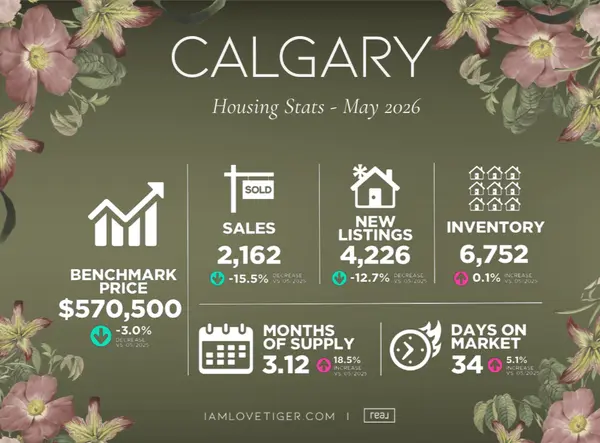
- Set a budget that includes the real costs. The purchase price is only part of the picture. Build in property taxes, home insurance, condo fees if they apply, utilities, and a cushion for maintenance. For reference, as of May 2026 the city-wide benchmark price in Calgary sits around 570,000 dollars. Detached homes run closer to 748,000, while condos and apartments are offering the strongest value as that segment moves in favour of buyers. Knowing which segment you are shopping in tells you what your true monthly cost will be.
- Get pre-approved. A pre-approval tells you exactly what you can borrow and holds your rate for a set period, so an increase during your search will not catch you off guard. It also signals to sellers that you are serious. A few things worth knowing under the current rules. Your minimum down payment is 5 percent on the first 500,000 dollars and 10 percent on the portion above that. As of December 2024 you can get an insured mortgage on homes priced up to 1.5 million dollars, up from 1 million. First-time buyers can now amortize an insured mortgage over 30 years, which lowers your monthly payment. Most buyers still need to pass the stress test, so your pre-approval is based on qualifying at a rate higher than the one you will actually pay.
- Work with an agent who knows the city block by block. As your realtor, my experience and local knowledge are working for you the entire way. I will help you find a home that fits your life and your budget, read each neighbourhood honestly, negotiate hard on your behalf, and keep your interests first from the first showing to the keys in your hand.
- Search with intent. Start online to get a feel for areas, prices, and what your budget buys in each part of the city. I will set you up on a custom search tuned to what matters to you and take you through homes in person. Think beyond the listing photos to location, layout, commute, and long-term potential. In a balanced market you have time to be selective, so use it.
- Make a strong, smart offer. Once you find the right home, we put together an offer built on what comparable homes have actually sold for, not guesswork. The seller can accept, reject, or counter, and I will guide the back and forth so you stay competitive without overpaying. Pricing strategy matters more than ever in a market that varies this much by property type and district.
- Get a home inspection. Once your offer is accepted, book an inspection. A good one surfaces issues you cannot see on a walkthrough, from the roof to the furnace, and protects you from buying someone else's problem.
- Negotiate on what the inspection finds. If the inspection turns up problems, we can ask the seller to repair them, reduce the price, or give you a credit at closing. This is where a sharp inspection report turns into real money back in your pocket.
- Finalize your mortgage. Work with your lender to lock everything in. This includes an appraisal to confirm the home is worth what you are paying. If you are buying a brand-new build, ask about the First-Time Home Buyers GST Rebate, now in effect, which refunds the full 5 percent GST on new homes up to 1 million dollars, worth up to 50,000 dollars, and scales down on homes priced between 1 million and 1.5 million. It applies to new construction only, not resale.
- Close and get your keys. On closing day everything comes together. I coordinate with the seller's agent, your lender, the inspector, and the lawyer or title company so nothing falls through the cracks. You sign the final paperwork, pay your down payment and closing costs, and the home is yours, usually by around noon.
Buying a home is a big decision and it should never be rushed. Take the time to understand each step, lean on the new programs that exist to help you, and bring in the right people. That is exactly what I am here for. When you are ready to start, let's talk.
Categories
Recent Posts